Commission Layers and Liquidity Pools: Analyzing Returns in Horse Racing Through Betting Exchanges and Fixed-Odds Systems
Written by Xander Fischer · Aug 21, 2026
Commission Layers and Liquidity Pools: Analyzing Returns in Horse Racing Through Betting Exchanges and Fixed-Odds Systems
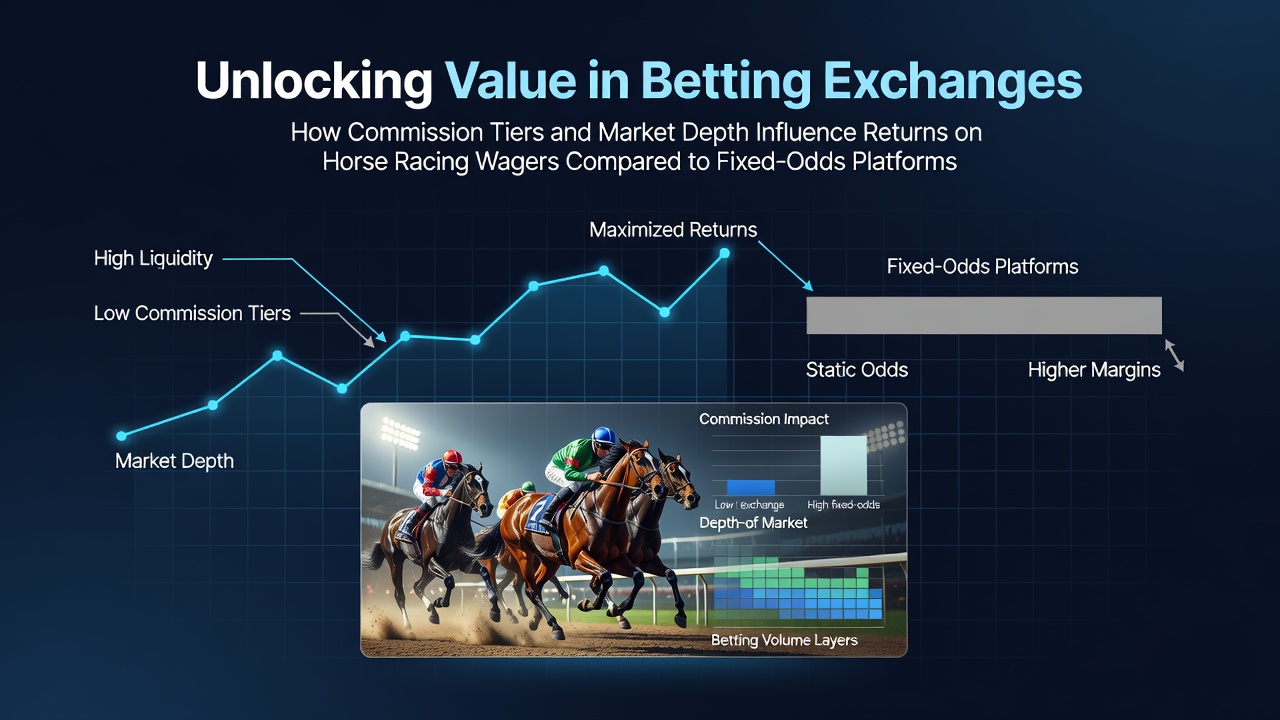
Betting exchanges operate on a peer-to-peer model where users place wagers against each other rather than against a traditional bookmaker, and this structure introduces commission tiers that deduct a percentage from winning bets while market depth determines how much liquidity supports larger stakes without shifting prices. Fixed-odds platforms lock in payouts at the time of placement, yet they embed margins that reflect the operator's risk exposure across multiple outcomes. Researchers tracking equine wagering patterns have noted that commission structures on exchanges range from 2 percent for high-volume accounts to 5 percent or higher for standard users, and these rates directly reduce net returns once a position settles successfully.
Commission Tiers and Their Direct Impact on Net Payouts
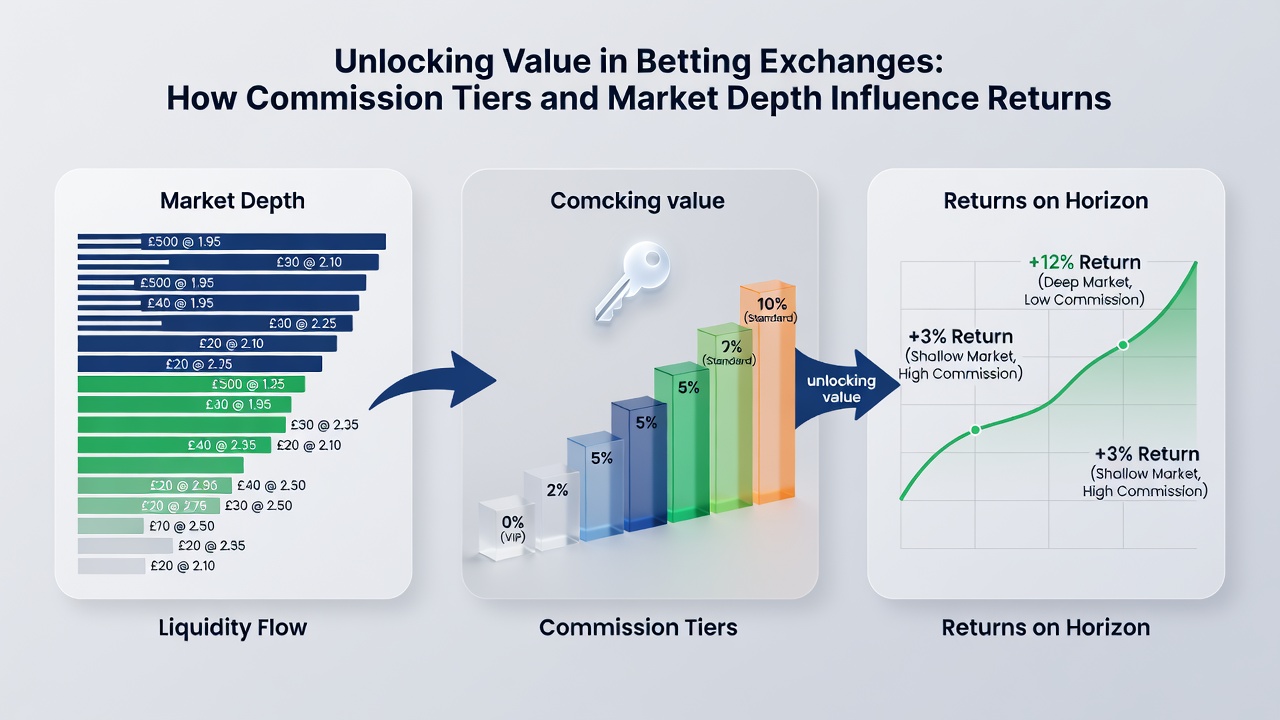
Commission tiers scale according to betting volume and account status, so frequent participants often qualify for lower percentages that preserve more of the gross profit after a horse wins. Data collected across multiple exchange platforms in 2025 shows that a 2 percent commission applied to a £100 profit leaves £98 in the account, whereas the same profit under a 5 percent tier yields only £95. Fixed-odds operators do not levy separate commissions, yet their built-in margins typically range from 2 to 6 percent on horse racing markets, and these deductions occur upfront through adjusted odds rather than post-settlement fees. Observers tracking August 2026 volume reports have seen exchanges adjust tier thresholds upward for certain regions, which has prompted some bettors to consolidate activity into fewer accounts to maintain lower rates.
Market Depth and Its Role in Price Stability
Market depth refers to the total volume of unmatched bets available at each price point, and deeper markets allow larger wagers to be matched without moving the available odds. Exchanges with high liquidity in popular races often display tight spreads between back and lay prices, whereas thinner markets in less prominent meetings can force users to accept worse terms or leave orders unmatched. Studies from academic research groups indicate that shallow depth increases the risk of partial fills, forcing bettors to split stakes across multiple price levels and thereby reducing overall efficiency. In contrast, fixed-odds books maintain consistent prices regardless of individual stake size up to their maximum limits, though those limits themselves vary by event popularity and operator policy.
Comparative Returns on Identical Horse Racing Selections
When the same selection appears on both an exchange and a fixed-odds platform, the effective return hinges on commission tier, matched liquidity, and the margin embedded in the fixed price. One analysis of 2025 race data revealed that a horse offered at 4.0 on an exchange with 3 percent commission produced a net multiplier of 3.88 after fees, while the same horse at 3.8 on a fixed-odds site delivered the full 3.8 without further deduction. Yet exchanges sometimes display superior starting prices when multiple layers compete, and the difference can offset commission costs when depth supports rapid matching. Industry reports compiled by research institutions in Australia highlight that bettors who monitor depth before committing larger stakes achieve higher realized returns over extended periods than those who place orders without checking available volume.
Fixed-odds platforms occasionally release enhanced prices or promotions that temporarily narrow the gap, although such offers carry their own eligibility rules and stake caps. Those who have examined transaction logs note that exchanges reward users who provide liquidity by laying outcomes, because lay-side activity can generate volume-based discounts on future commissions. Fixed-odds operators absorb all risk internally, so they rarely extend similar incentives beyond standard sign-up bonuses.
Practical Considerations for Different Stake Sizes
Smaller stakes encounter fewer depth limitations on exchanges, allowing users to match at advertised prices with minimal slippage. Larger positions, however, often require patience or price concessions when liquidity thins, and this dynamic becomes especially visible in handicap races with many runners. Fixed-odds books publish maximum stake thresholds that scale with market interest, yet exceeding those limits forces bettors to split wagers across multiple operators. Evidence gathered by Canadian regulatory bodies shows that participants who diversify across both exchange and fixed-odds channels can capture price discrepancies that arise from differing risk models.
Conclusion
Commission tiers on exchanges create a variable cost that scales with account status and volume, while market depth governs the feasibility of executing larger positions at favorable terms. Fixed-odds platforms embed margins directly into quoted prices and offer predictable maximum stakes, yet they do not adjust fees based on user activity. Data from multiple sources demonstrates that returns on horse racing wagers depend on aligning stake size with available liquidity and selecting the channel whose cost structure best matches the bettor's typical activity level. Those monitoring developments through 2026 continue to track how tier adjustments and liquidity patterns evolve across both models.