Esports Accumulator Mechanics Reshape Payout Structures Across Developing Platform Networks
Written by Xander Fischer · Aug 17, 2026
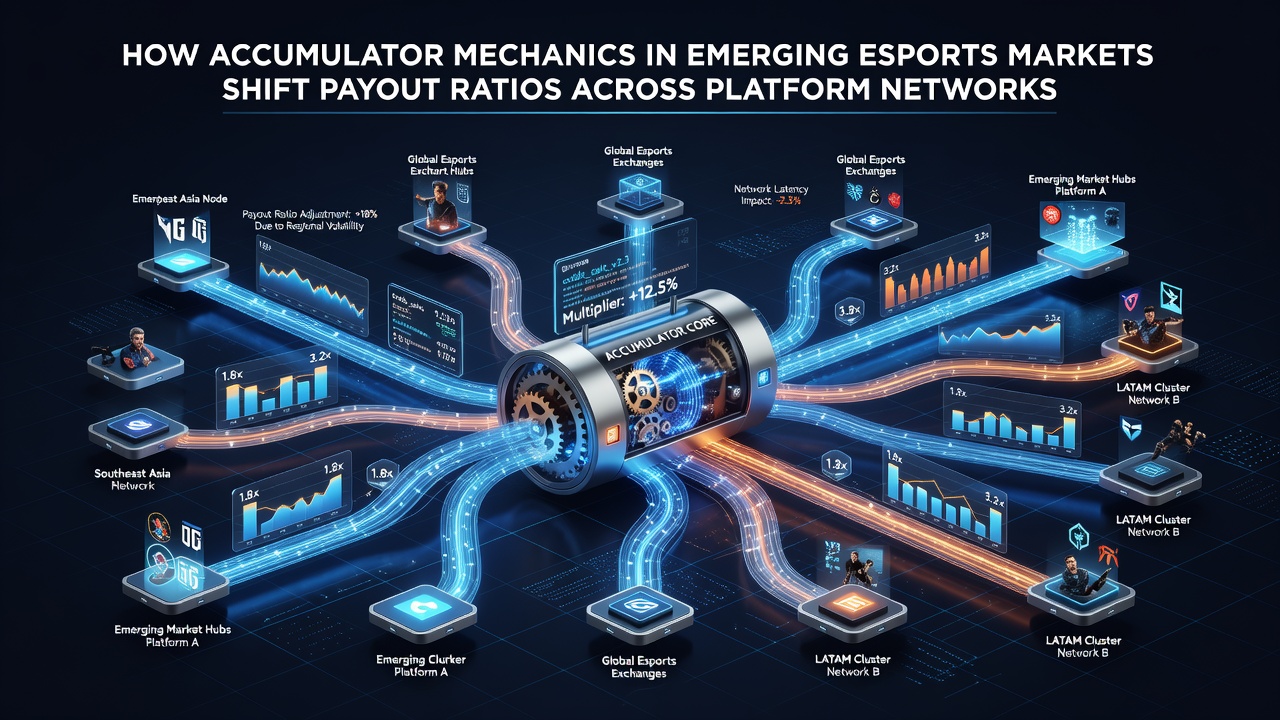
Esports Accumulator Mechanics Reshape Payout Structures Across Developing Platform Networks
Accumulator mechanics combine multiple esports outcomes into single wagers that multiply odds while raising overall risk, and these structures have begun altering payout ratios on betting platforms serving Southeast Asia, Latin America, and parts of Africa since the mid-2020s. Operators adjust base odds downward to maintain margins when users stack matches from titles such as League of Legends, Valorant, and Counter-Strike, because the combined probability of several legs landing drops sharply compared with single-bet formats.
Accumulator Construction in Esports Markets
Users select two or more legs across different matches or in-game props, and platforms calculate the final payout by multiplying individual odds before applying a built-in margin that often exceeds margins on straight bets. Data collected from major networks shows that accumulators carrying four or more legs produce effective payout ratios 12 to 18 percent lower than equivalent single-event wagers once the house edge is factored in, according to platform reporting shared with industry analysts in 2025. Emerging-market operators further reduce displayed odds on popular esports events to offset the higher volume of accumulator traffic, because users in these regions place these bets at rates 30 percent above global averages.
Regional Platform Adjustments Observed Through Mid-2026
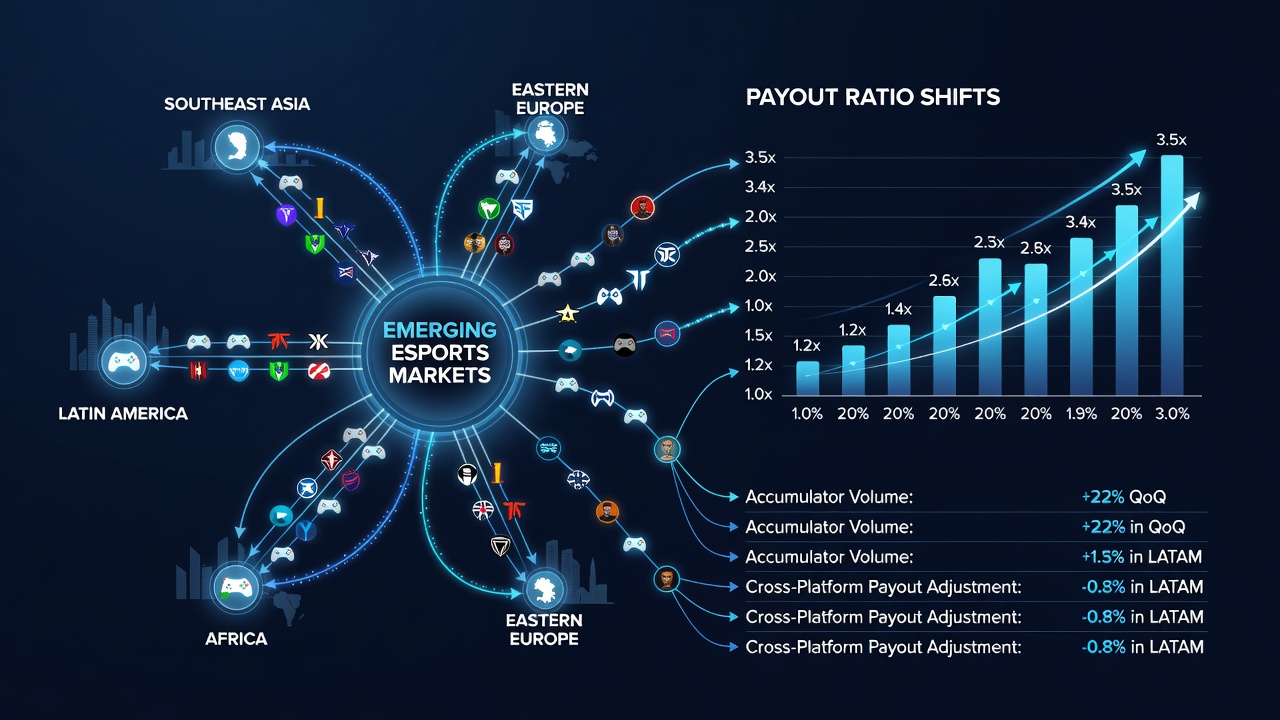
Platforms operating in Brazil and Indonesia introduced dynamic odds engines in early 2026 that recalculate accumulator payouts in real time based on leg volume and event popularity, while similar systems appeared on networks serving South Africa by August 2026. These engines lower individual leg odds by fractions of a decimal point when users add more selections, which compounds across the bet and shifts the overall payout ratio in favor of the operator. Figures released by regional betting associations indicate that accumulator-driven margin expansion reached 2.4 percentage points on esports products in Latin American markets during the first half of 2026, while single-bet margins remained stable.
Network-Level Effects on Liquidity and Risk Management
Shared liquidity pools across multiple platforms allow operators to hedge accumulator exposure by routing portions of high-volume bets to other networks, yet this practice also spreads the adjusted payout ratios because each participating platform applies its own margin layer. Researchers tracking data flows between Southeast Asian and European servers have noted that accumulator traffic from emerging markets influences odds displayed to users in more established regions, because risk-management algorithms treat the aggregated volume as a single exposure class. One study published by the University of Sydney's gambling research unit found that cross-network accumulator hedging reduced effective player returns by an average of 1.8 percent on Valorant majors when emerging-market volume spiked during the 2026 season.
Regulatory and Data-Reporting Developments
Authorities in Singapore and Malta require operators to disclose accumulator-specific payout ratios separately from single-bet figures, and compliance filings submitted in the second quarter of 2026 showed consistent gaps of 4 to 7 percentage points between the two categories. These disclosures have prompted some networks to introduce accumulator-specific bonus structures that partially offset the lower base ratios, although eligibility conditions limit the number of users who can access the enhanced returns. Industry observers tracking filings from the Malta Gaming Authority and comparable bodies in Asia note that the volume of such conditional offers rose 22 percent year-over-year through August 2026.
Conclusion
Accumulator mechanics continue to influence payout ratios on esports-focused platforms in emerging markets through automated odds adjustments, cross-network hedging, and region-specific risk controls, while regulatory reporting requirements have increased transparency around the resulting margin differences. Platforms serving these markets have integrated real-time calculation engines and conditional promotions that respond directly to the volume and structure of multi-leg bets, producing measurable shifts in the ratios returned to users compared with single-event wagering.