How Accumulator Payout Structures Differ Across Football and Horse Racing Markets When Layered with Cashback Incentives from Multiple Operators
Written by Henrik Braun · Aug 19, 2026
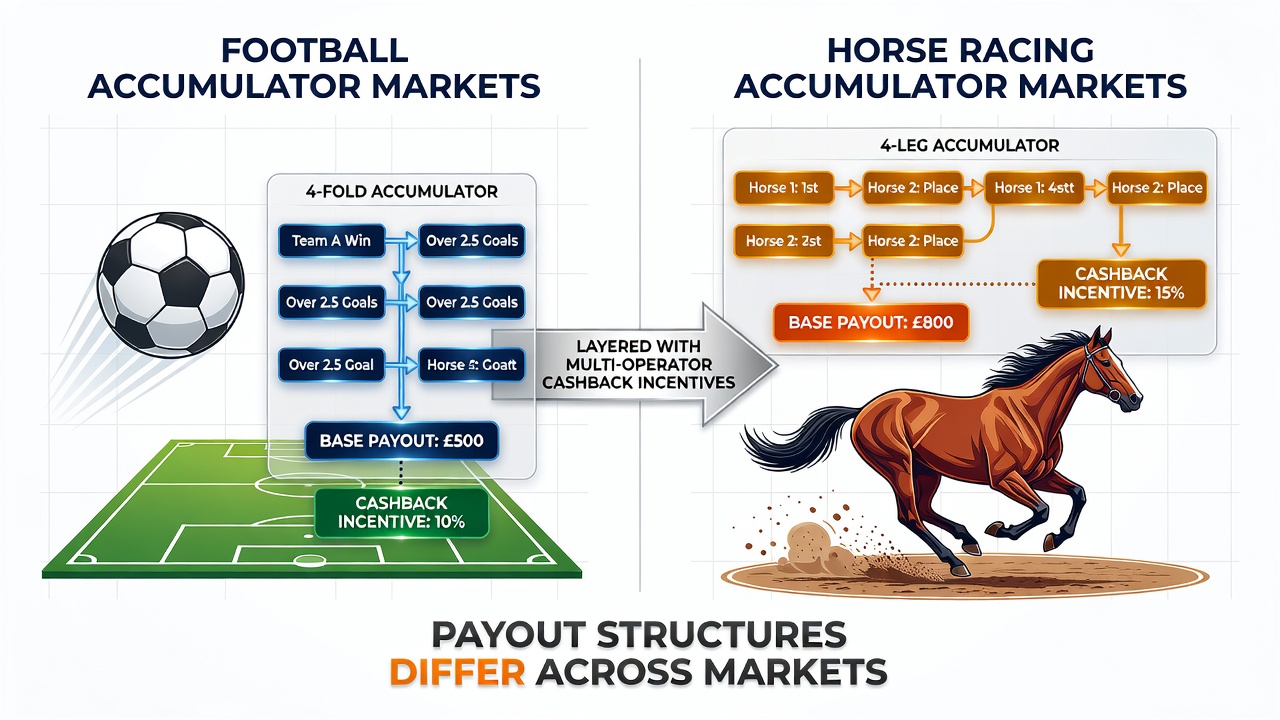
Accumulator Payout Variations in Football and Horse Racing Markets Layered with Operator Cashback Offers
Accumulators combine multiple selections into a single bet where every outcome must succeed for the wager to pay out, and this structure produces multiplied odds that scale differently depending on the sport. In football markets operators calculate these products across leagues with fixed margins applied per leg, whereas horse racing incorporates pool-based elements or fixed odds that adjust for race variables such as distance and field size. Data from August 2026 shows continued growth in accumulator volume on both sides, with cashback programs from several operators adding refund layers that reduce net exposure when individual selections fail. Football accumulators typically require three to six legs drawn from separate fixtures, and each leg carries a margin that compounds across the ticket. Operators adjust these margins based on league liquidity and event timing, which leads to higher overall deductions compared with single-match bets. When cashback incentives enter the picture, multiple operators can structure refunds on net losses across the entire accumulator or on specific failed legs, yet the timing of those refunds varies because settlement occurs after all events conclude. Observers note that stacking cashback across platforms requires tracking distinct terms, since one operator might cap refunds at 10 percent while another applies tiered rates tied to total stake volume. Horse racing accumulators differ because selections often span races scheduled hours or days apart, and tote pools introduce variable dividends that settle after the final leg. Fixed-odds bookmakers in this space post prices that already embed track-specific deductions, and accumulators built from these prices produce payout trajectories sensitive to late scratches or weather changes. Cashback programs layered here frequently reference the original stake rather than the multiplied return, which alters how losses are calculated when an early leg fails. Figures from industry analyses reveal that horse racing cashback tends to trigger on daily aggregates, whereas football versions align more closely with weekend fixture clusters.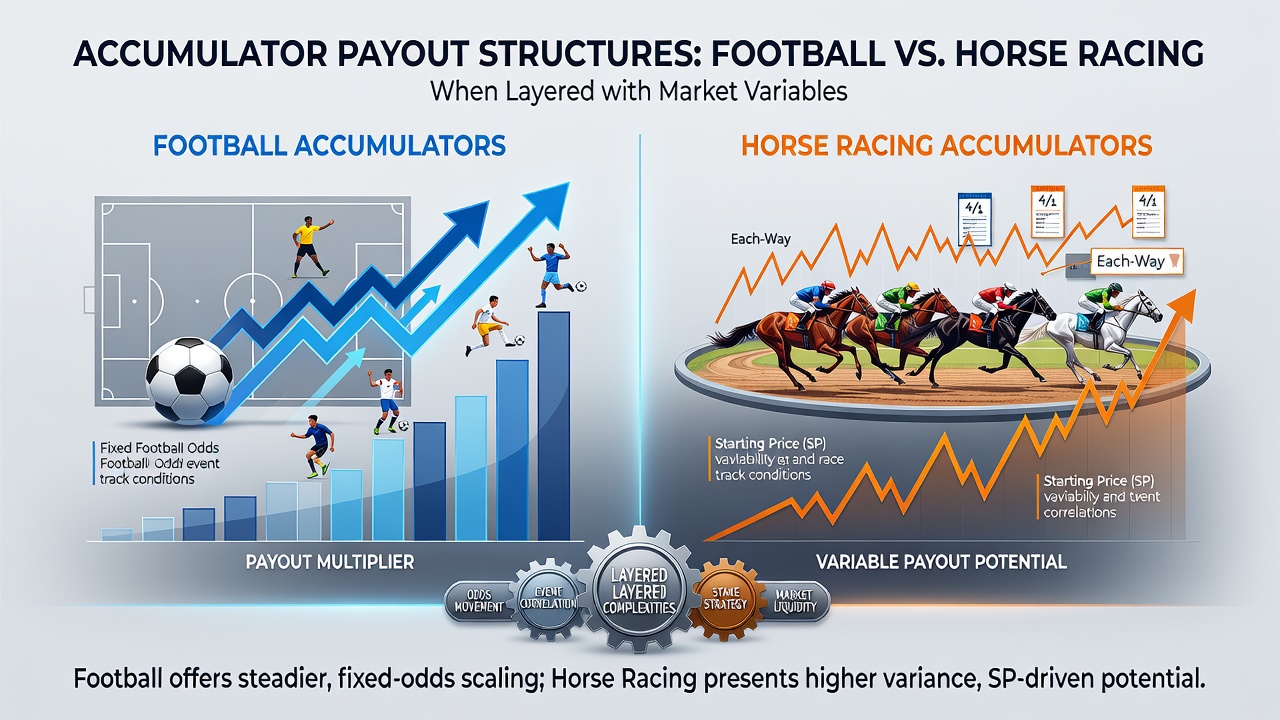 Research from the Australian Gambling Research Centre indicates that combined cashback rates rarely exceed 15 percent of net loss when three operators participate, and eligibility often excludes certain high-odds legs common in both sports. Football accumulators with four or more selections trigger stricter rollover conditions on the refunded amount, whereas horse racing cashback sometimes applies without additional playthrough because race outcomes carry higher inherent variance. Those who track multiple accounts report that reconciliation spreadsheets become necessary once daily volumes increase, because each platform posts statements in different formats.
Accumulators combine multiple selections into a single bet where every outcome must succeed for the wager to pay out, and this structure produces multiplied odds that scale differently depending on the sport. In football markets operators calculate these products across leagues with fixed margins applied per leg, whereas horse racing incorporates pool-based elements or fixed odds that adjust for race variables such as distance and field size. Data from August 2026 shows continued growth in accumulator volume on both sides, with cashback programs from several operators adding refund layers that reduce net exposure when individual selections fail. Football accumulators typically require three to six legs drawn from separate fixtures, and each leg carries a margin that compounds across the ticket. Operators adjust these margins based on league liquidity and event timing, which leads to higher overall deductions compared with single-match bets. When cashback incentives enter the picture, multiple operators can structure refunds on net losses across the entire accumulator or on specific failed legs, yet the timing of those refunds varies because settlement occurs after all events conclude. Observers note that stacking cashback across platforms requires tracking distinct terms, since one operator might cap refunds at 10 percent while another applies tiered rates tied to total stake volume. Horse racing accumulators differ because selections often span races scheduled hours or days apart, and tote pools introduce variable dividends that settle after the final leg. Fixed-odds bookmakers in this space post prices that already embed track-specific deductions, and accumulators built from these prices produce payout trajectories sensitive to late scratches or weather changes. Cashback programs layered here frequently reference the original stake rather than the multiplied return, which alters how losses are calculated when an early leg fails. Figures from industry analyses reveal that horse racing cashback tends to trigger on daily aggregates, whereas football versions align more closely with weekend fixture clusters.Core Differences in Payout Calculation
Payout formulas start from the same multiplication principle yet diverge once sport-specific rules apply. Football tickets multiply decimal odds directly and settle simultaneously once the last match ends, which allows cashback calculations to reference a single net figure. Horse racing accumulators can involve conditional payouts if a selection is declared a non-runner, and operators adjust the remaining legs without resetting the entire ticket. Multiple cashback providers therefore evaluate the revised accumulator value differently, and this produces timing mismatches when refunds arrive from separate accounts. Studies conducted by the Nevada Gaming Control Board highlight how margin stacking in football exceeds that observed in racing pools, because each additional leg adds an independent bookmaker edge. In contrast, tote-based horse racing payouts distribute the pool remainder after deductions, which reduces the fixed margin impact but introduces volatility from other bettors' activity. When cashback incentives from two or three operators combine with these structures, the effective return improves only if the refund percentage exceeds the cumulative margin difference between the two sports.Layering Cashback Across Operators
Operators issue cashback through loyalty tiers or promotional windows, and users can register with several platforms to capture overlapping refunds on the same accumulator stake. The process requires separate accounts and distinct verification steps, yet settlement rules remain independent. One operator might credit cashback within 24 hours of loss confirmation, while another withholds payment until the end of a calendar week. These staggered releases affect cash flow when football accumulators settle on Sunday evenings and horse racing tickets conclude midweek.
Research from the Australian Gambling Research Centre indicates that combined cashback rates rarely exceed 15 percent of net loss when three operators participate, and eligibility often excludes certain high-odds legs common in both sports. Football accumulators with four or more selections trigger stricter rollover conditions on the refunded amount, whereas horse racing cashback sometimes applies without additional playthrough because race outcomes carry higher inherent variance. Those who track multiple accounts report that reconciliation spreadsheets become necessary once daily volumes increase, because each platform posts statements in different formats.