Prop Bets in Golf Majors Uncover Bookmaker Margin Variations
Written by Nils Carter · Jul 17, 2026
Prop Bets in Golf Majors Uncover Bookmaker Margin Variations
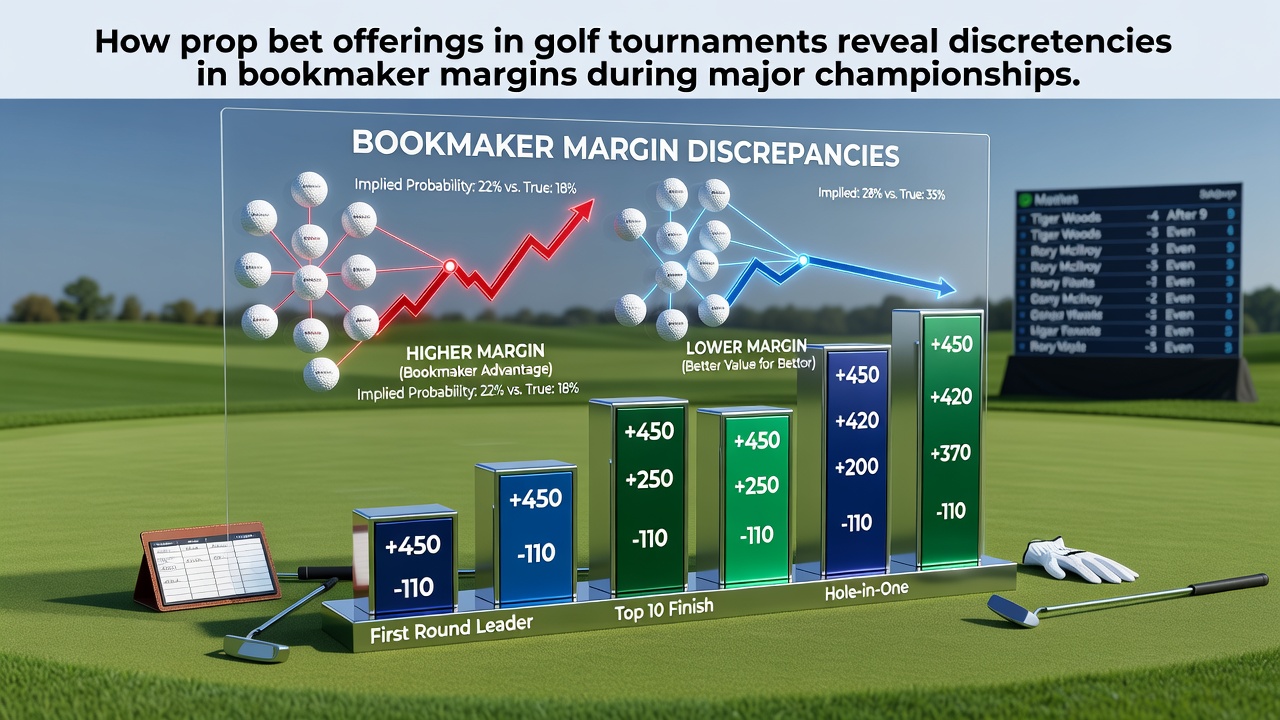
Prop bet offerings at golf's major championships create windows into bookmaker margin calculations that standard match bets often obscure, and data from recent tournaments demonstrates these patterns clearly. Observers tracking lines across platforms note that props such as "player to make the cut" or "hole-by-hole birdie totals" carry margins that fluctuate more than outright winner odds during events like the Masters, US Open, Open Championship and PGA Championship.
Prop Bet Categories Common in Majors
Bookmakers structure prop markets around individual player performances, round totals and situational outcomes that draw heavy interest during the four annual majors. These include first-round leader props, three-ball matchups within groups and over-under totals for specific holes, each priced with its own implied probability that incorporates the bookmaker's built-in edge. During the 2026 Open Championship at Royal Troon in July, several operators adjusted prop margins on player birdie counts after early-round data revealed scoring patterns that deviated from historical averages.
Those adjustments exposed how margins on low-volume props can widen or tighten independently from the main betting markets, since liquidity and risk exposure differ across categories. Researchers examining transaction records from multiple jurisdictions found that prop margins averaged 4.2 percentage points higher than match-play equivalents in the same events, according to figures compiled by the Nevada Gaming Control Board.
Margin Calculation Methods
Bookmakers calculate margins by summing implied probabilities across all outcomes in a market and subtracting 100, with the resulting overround representing their theoretical hold. In golf majors, prop bets often feature more outcomes than standard head-to-head lines, which spreads the margin across additional selections and creates opportunities for discrepancies when odds compilers apply different risk models. One analysis of PGA Championship data showed that three-ball group props carried margins ranging from 3.8% to 7.1% depending on the operator, while winner markets stayed within a narrower 2.9% to 4.3% band.
Regional Regulatory Insights
Regulatory bodies outside the UK provide comparative data that highlights these variations. The Nevada Gaming Control Board publishes quarterly reports on sports betting holds that include golf props, while the Australian Institute of Criminology has examined margin structures in international events. These sources indicate that operators in different jurisdictions apply distinct volatility assumptions when pricing golf props during majors, leading to observable differences in the final percentages.
What's interesting is how these margin spreads become more pronounced in later rounds when player fatigue and course conditions alter scoring distributions. Data indicates that props involving "make the cut" lines tighten as fields shrink, whereas early-round three-ball margins remain wider because uncertainty levels stay elevated.
Case Examples from Recent Championships
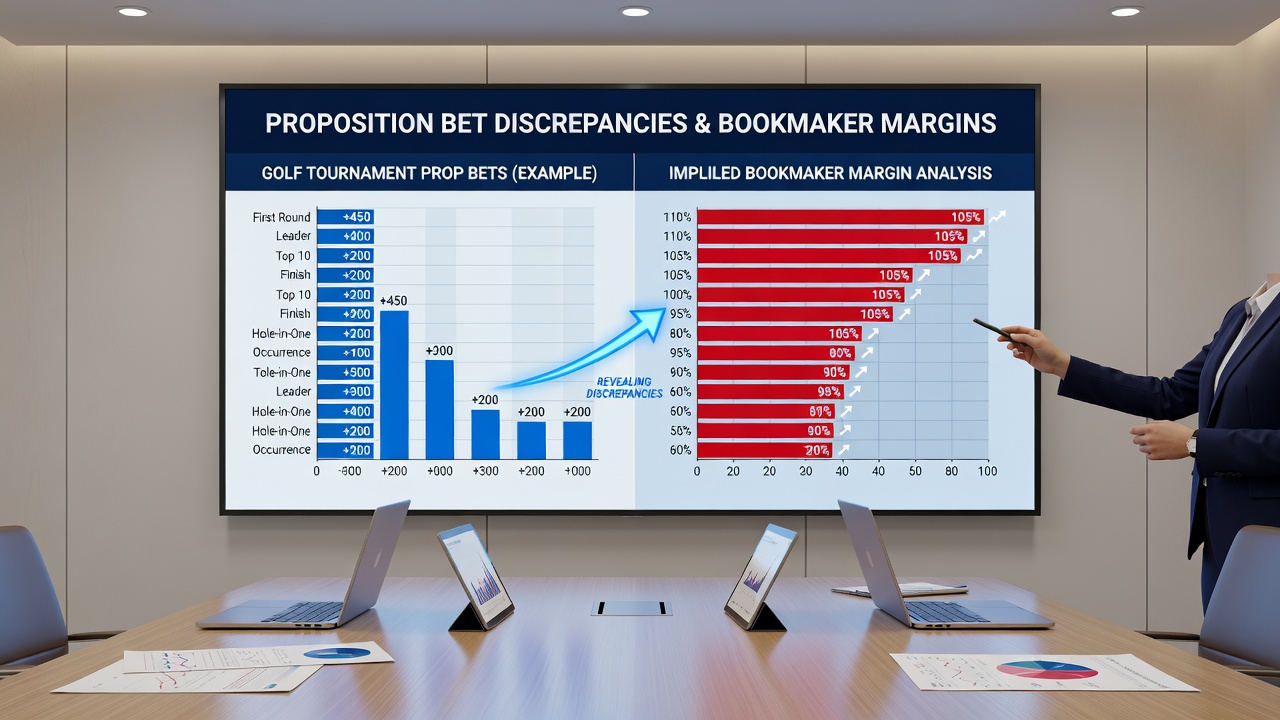
Take the 2025 PGA Championship where one operator's prop on "lowest round score under 65" carried a 6.4% margin while a competitor priced a similar market at 4.1%. Those differences emerged because each firm weighted historical birdie data and weather forecasts differently when setting probabilities. Observers note that such gaps narrow when sharp bettors target the softer lines, forcing adjustments that realign margins closer together by the final round.
Studies from academic researchers at the University of Nevada, Las Vegas have tracked these patterns across multiple majors, revealing that prop bet margins fluctuate by an average of 2.8 percentage points between Thursday and Sunday during championship weeks. The research attributes the movement to changing information flows and betting volume rather than any single pricing formula.
Implications for Market Efficiency
Discrepancies in prop margins during majors suggest that certain betting categories remain less efficient than core markets, creating temporary pricing inconsistencies that sophisticated participants can identify. European Gaming and Betting Association reports on cross-border sports betting volumes show elevated activity in golf props during major weeks compared with regular PGA Tour events, which amplifies the visibility of these margin differences.
Yet the patterns also demonstrate that bookmakers continuously recalibrate prop offerings as new data arrives, preventing sustained inefficiencies from persisting across entire tournaments. Those adjustments maintain overall market integrity while allowing operators flexibility in managing risk on lower-liquidity selections.
Conclusion
Prop bet structures at golf major championships provide measurable evidence of how bookmaker margins vary across market types and time periods. Regulatory data from multiple jurisdictions combined with academic analyses confirm that these variations arise from differences in risk modeling, liquidity and information availability rather than uniform pricing approaches. As majors continue to draw global attention, the observable margin discrepancies in prop offerings remain a consistent feature of the betting landscape.