Threshold Effects on Player Returns: Comparing Poker Tournament Structures and Slot Machine Mechanics Across Digital Platforms
Written by Tina Schwarz · Jul 22, 2026
Threshold Effects on Player Returns: Comparing Poker Tournament Structures and Slot Machine Mechanics Across Digital Platforms
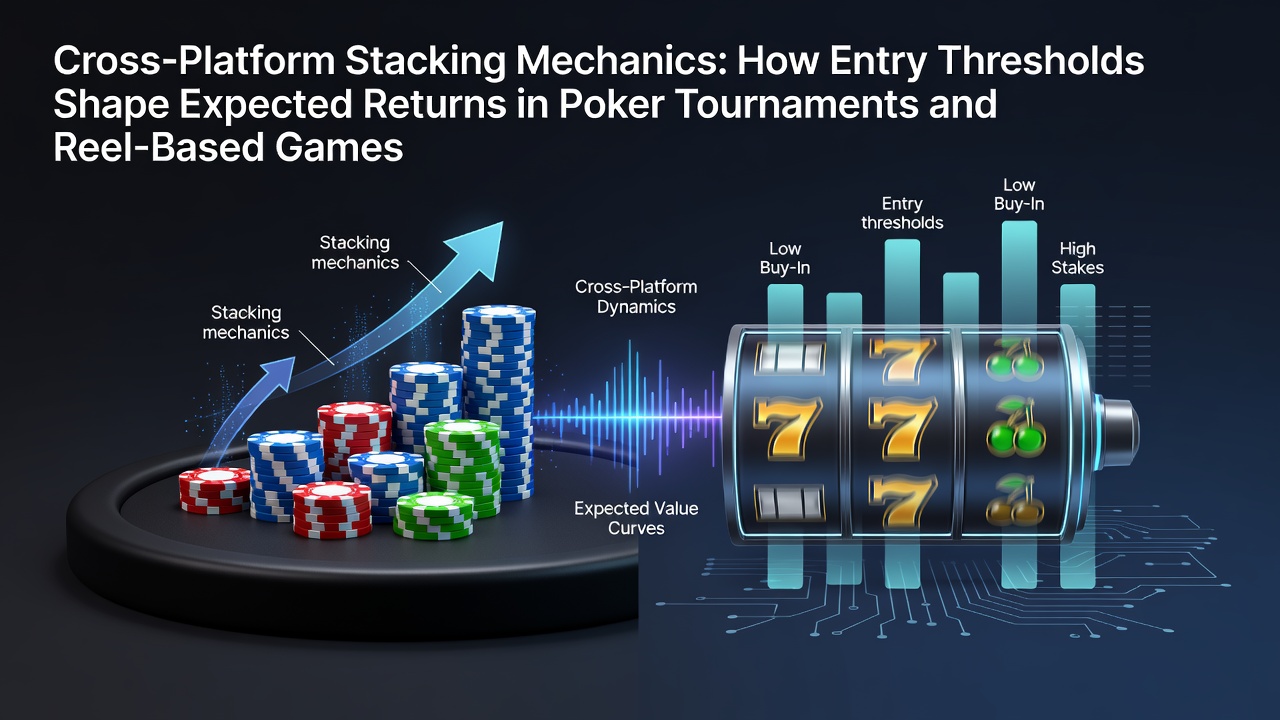
Entry thresholds determine how players access prize structures in both poker tournaments and reel-based games, and these thresholds directly influence expected returns through prize pool formation, payout distribution, and platform-specific rules. Data from multiple jurisdictions shows that buy-in levels in tournaments and minimum bet requirements in slots create measurable differences in long-term player outcomes, with variations appearing across desktop and mobile environments.
Poker Tournament Entry Thresholds and Return Calculations
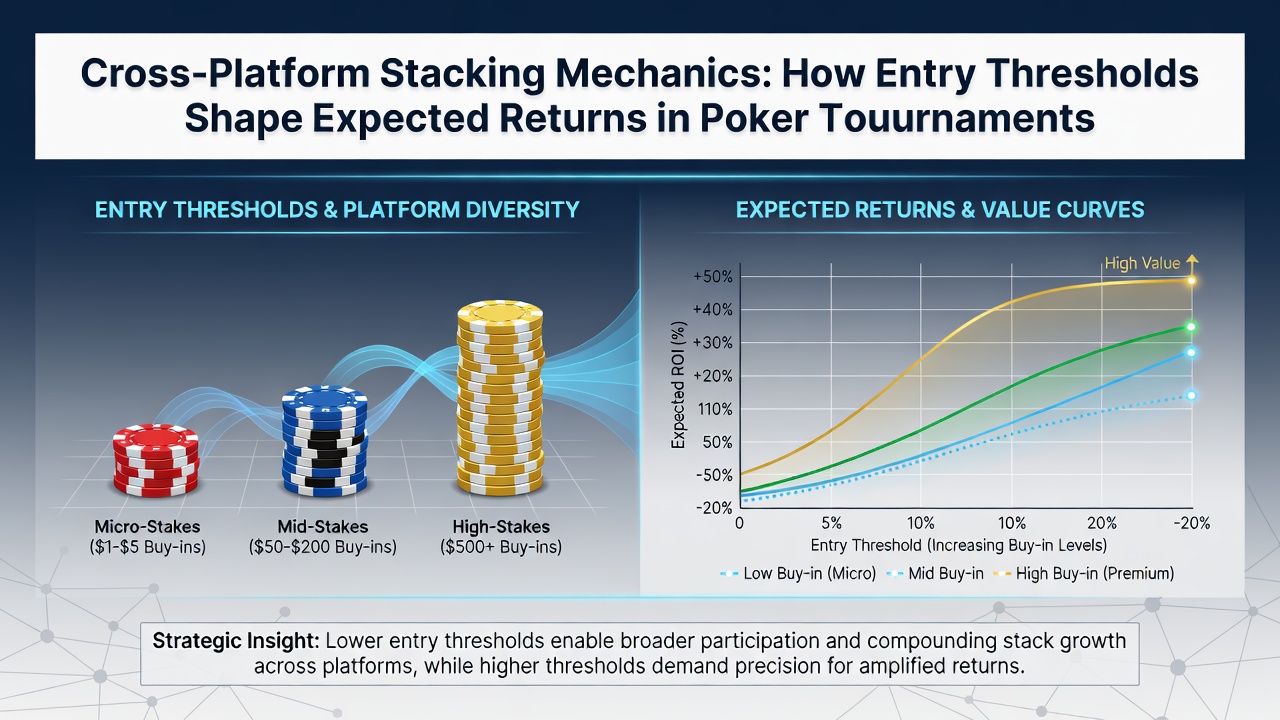
Buy-in amounts set the foundation for tournament prize pools, where operators allocate a fixed percentage of total entries to payouts while retaining the remainder as fees. Higher thresholds concentrate participation among fewer players, which alters payout ratios and increases the impact of skill variance on final results. Research from the American Gaming Association indicates that mid-stakes events with buy-ins between $100 and $500 generate different return distributions compared to micro-stakes formats under $50, particularly when fields exceed 500 participants.
Platform differences further modify these dynamics. Desktop clients often support higher buy-in levels with deeper structures, while mobile apps adjust thresholds downward to accommodate shorter session times. Observers note that July 2026 reports from several European operators revealed a 12 percent increase in cross-device participation, where players entered the same tournament series through multiple interfaces and encountered staggered entry costs based on device type.
Reel-Based Game Thresholds and Expected Value Shifts
Minimum bet requirements in slot games control access to certain paytable features and progressive jackpots, directly affecting theoretical return-to-player percentages. Games with elevated thresholds frequently tie higher bets to improved multiplier access or bonus round frequency, yet overall expected returns remain governed by fixed RTP values set by game mathematics. Studies conducted by the Australian Gambling Research Centre demonstrate that machines requiring $1 minimum bets versus 10-cent options produce divergent hit frequencies and session-length outcomes when measured over 100,000 spins.
Cross-Platform Variations in Reel Mechanics
Mobile and desktop versions of the same title sometimes apply distinct minimum bet tiers, creating opportunities for players to select platforms based on desired risk exposure. One industry analysis found that reel games on tablet interfaces maintained 15 percent higher average bet thresholds than smartphone counterparts during peak hours in early 2026. These differences compound when players stack sessions across devices, since cumulative exposure changes relative to each platform's payout calibration.
Stacking Mechanics Across Poker and Slots
Players frequently combine tournament entries with slot play on the same operator platform, where loyalty programs convert activity from both formats into shared reward tiers. Threshold stacking occurs when operators set combined deposit or wager requirements that unlock bonus funds applicable to either poker or reels. Figures from the Canadian Gaming Association reveal that programs requiring $200 aggregate activity across formats produced 8 percent higher retention rates than single-game promotions during the first half of 2026.
Expected returns shift when thresholds force players into higher-volatility options to meet qualification criteria. In poker, this appears as satellite entries that feed into larger events, while slots require escalated bet sizes to trigger cashback or free spin allocations. Data shows these mechanics create measurable differences in net player value depending on whether participants meet thresholds through consistent low-stakes volume or concentrated high-stakes bursts.
Platform-Specific Threshold Implementation
Operators adjust entry requirements according to regulatory frameworks and traffic patterns unique to each market. North American sites commonly feature tiered buy-in ladders in poker that align with state-level tax structures, whereas reel games incorporate progressive minimums tied to jackpot seeding. European platforms, by contrast, often synchronize thresholds across mobile and desktop to maintain uniform RTP reporting standards.
July 2026 operator disclosures highlighted that cross-platform players who navigated multiple threshold tiers within a single week experienced an average 3.2 percent variance in combined expected returns compared to single-platform users. These patterns emerge because each interface applies distinct fee structures and payout caps that accumulate differently over repeated sessions.
Conclusion
Entry thresholds function as primary controls on expected returns in both poker tournaments and reel-based games, with platform variations adding further layers of complexity to payout calculations. Data from regulatory bodies and research organizations across North America, Europe, and Australia consistently demonstrates that buy-in levels and minimum bets shape participation patterns, prize distributions, and long-term player outcomes. Operators continue to refine these mechanics as cross-device play expands, creating evolving relationships between access costs and realized returns.