Tracking Accumulator Value Adjustments Across Europe's Top Football Leagues and Digital Betting Liquidity Systems
Written by Finley Becker · Jun 12, 2026
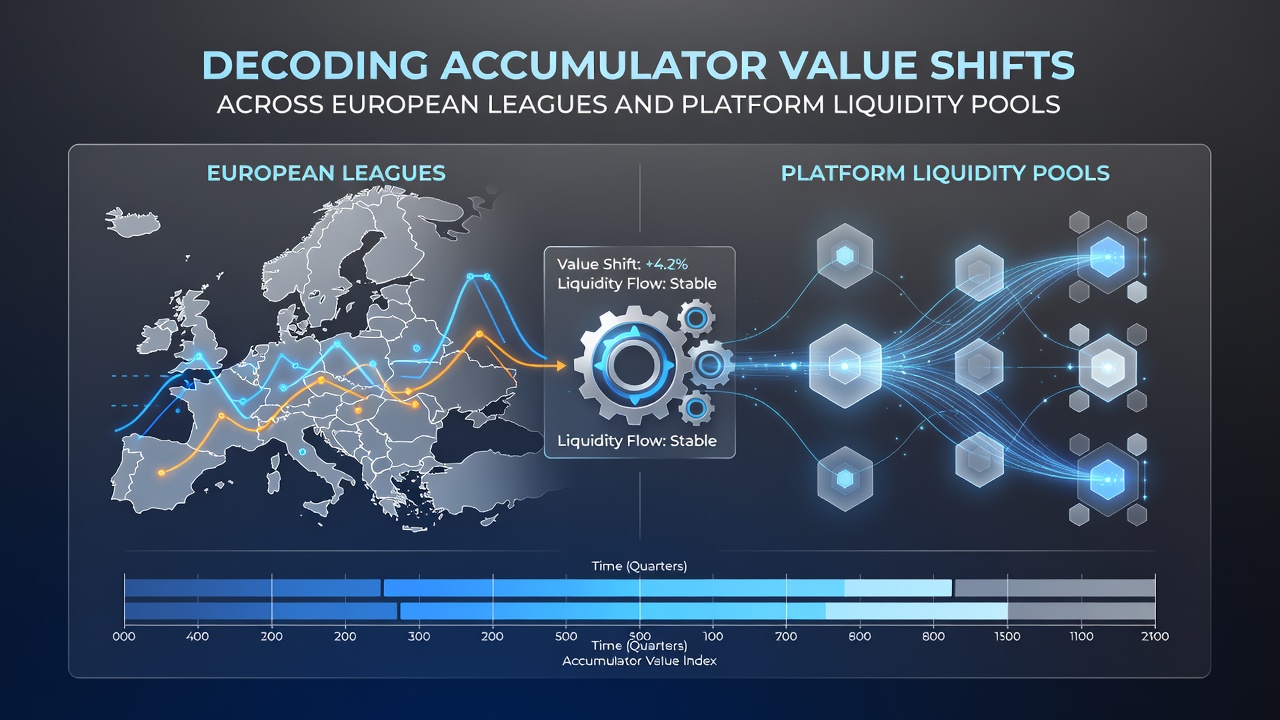
Tracking Accumulator Value Adjustments Across Europe's Top Football Leagues and Digital Betting Liquidity Systems
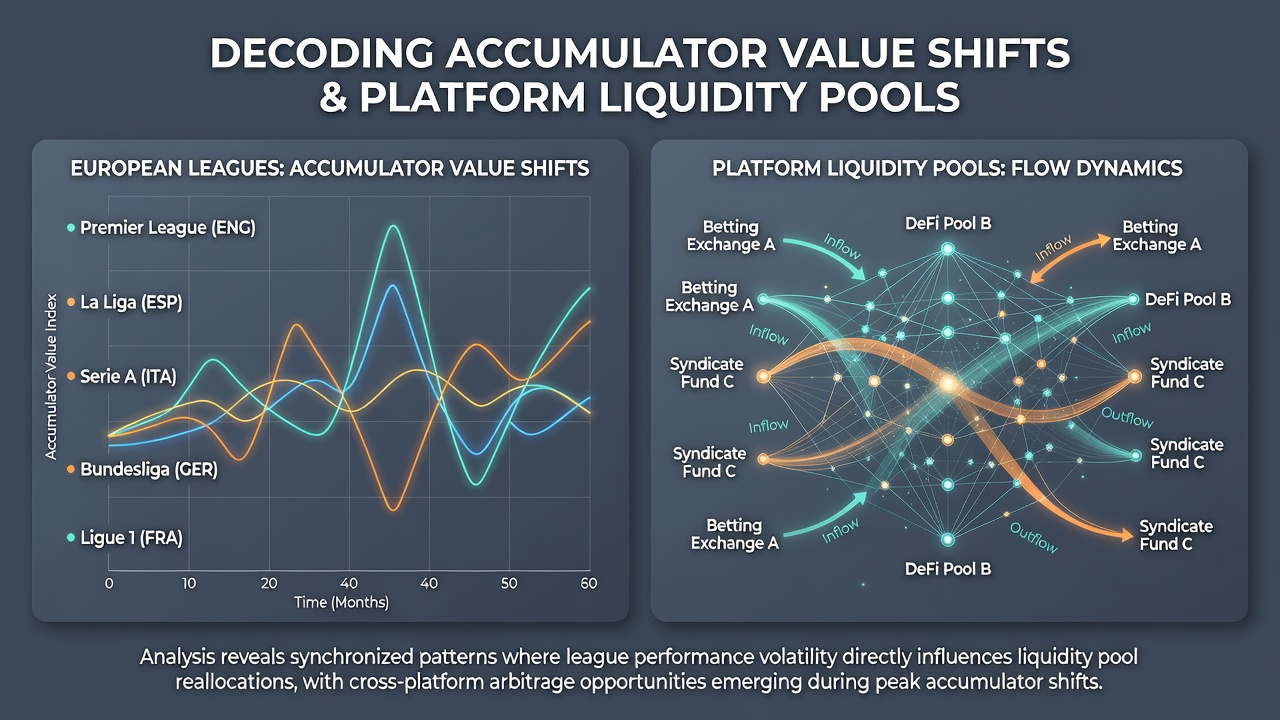
Accumulator bets combine multiple selections into single wagers, and their values shift according to performance trends across leagues such as the Bundesliga, La Liga, Serie A, and Ligue 1. Data from European betting markets shows that these combinations respond to team form, injury reports, and fixture congestion while platform liquidity pools determine how quickly odds adjust when bet volumes spike. Observers note that liquidity refers to the depth of available stakes on each leg, which influences margin calculations and final payouts when markets move rapidly.
European leagues produce distinct patterns in accumulator construction because playing styles differ markedly between divisions. Bundesliga matches often feature higher scoring averages, which alters the probability weightings when bettors stack over-2.5 goals selections with clean-sheet outcomes from defensive-minded Serie A sides. Figures released by the European Gaming and Betting Association in early 2026 indicate that accumulator handle across these markets grew by 12 percent year-on-year through May, with the strongest gains recorded in multi-leg bets spanning three or more leagues.
Liquidity Pool Mechanics and Odds Responsiveness
Platform liquidity pools aggregate unmatched bets and matched stakes in real time, and this aggregation directly affects how accumulator values recalculate after each goal or card. When liquidity thins on a particular leg, bookmakers widen margins to protect against imbalance, which compresses overall returns for the full accumulator. Those who monitor exchange data report that a sudden surge in matched volume on one side of a market can trigger automated repricing across linked accumulator products within seconds.
June 2026 brought increased volatility to several liquidity pools after the conclusion of domestic cup competitions left clubs with altered squad rotations. Researchers tracking in-play accumulator adjustments observed that reduced liquidity on lower-profile midweek fixtures forced wider spreads, particularly on combinations that mixed Premier League selections with Eredivisie matches. The resulting value shifts appeared most pronounced on four-leg and five-leg accumulators where one leg carried lower overall interest.
League-Specific Performance Drivers
Performance metrics collected across the 2025-26 season highlight how individual league characteristics influence accumulator construction. La Liga fixtures produced tighter defensive outcomes on average, which increased the relative value of under-2.5 goals legs when paired with higher-scoring Bundesliga selections. Serie A data showed elevated draw rates in away games, prompting bettors to incorporate draw-no-bet options that stabilized accumulator returns during periods of fixture congestion.
Analysts at independent research institutions have documented that teams involved in European competition experience measurable dips in domestic accumulator reliability once midweek travel accumulates. These dips manifest as slower odds movement on home selections because liquidity providers adjust for fatigue-related variance. The effect compounds when multiple legs originate from clubs competing on multiple fronts, creating measurable deviations between pre-match and in-play accumulator pricing.
Cross-Platform Comparisons and Settlement Timing
Settlement timing varies between traditional bookmakers and peer-to-peer exchanges because liquidity models differ. Traditional operators maintain fixed margins that absorb smaller volume changes, whereas exchanges allow accumulator odds to float according to unmatched orders. Data compiled by academic groups studying European wagering markets reveals that exchange-based accumulators often deliver higher returns during periods of stable liquidity, but they expose bettors to greater slippage when sudden volume spikes occur near kickoff.
Observers tracking June 2026 activity noted that several platforms introduced automated accumulator builders that recalculate potential payouts after each confirmed team line-up. These tools pull real-time liquidity metrics from multiple pools, which reduces the window for manual bet placement before odds drift. The integration of such features coincided with a measurable uptick in five-leg and six-leg accumulator activity across tracked operators.
Market Depth Indicators and Risk Distribution
Market depth indicators help explain why certain accumulator structures retain value longer than others. Pools with greater overall stake volume on a given leg demonstrate slower price movement even when external news emerges, whereas thinner pools react sharply to the same information. European operators have reported that accumulators combining selections from the top five leagues maintain deeper liquidity throughout the weekend schedule compared with those that incorporate secondary competitions.
Those studying these patterns note that risk distribution across legs becomes critical once liquidity contracts. A single low-liquidity leg can drag teh entire accumulator payout trajectory, even when the remaining selections align with expected outcomes. June 2026 figures show that platforms began publishing liquidity heat maps alongside accumulator builders, allowing bettors to identify combinations where depth remains sufficient to limit margin expansion.
Conclusion
Accumulator value shifts across European leagues reflect the interplay between on-field performance trends and the liquidity available on each platform. Data from multiple seasons demonstrates that league-specific characteristics, fixture schedules, and pool depth all contribute to measurable changes in potential returns. Continued monitoring of these variables provides a factual basis for understanding how odds evolve as new information enters the market and as liquidity redistributes across competing selections.